Enabling Seamless Indoor Navigation at One of India’s Largest Healthcare Campuses
Client Overview
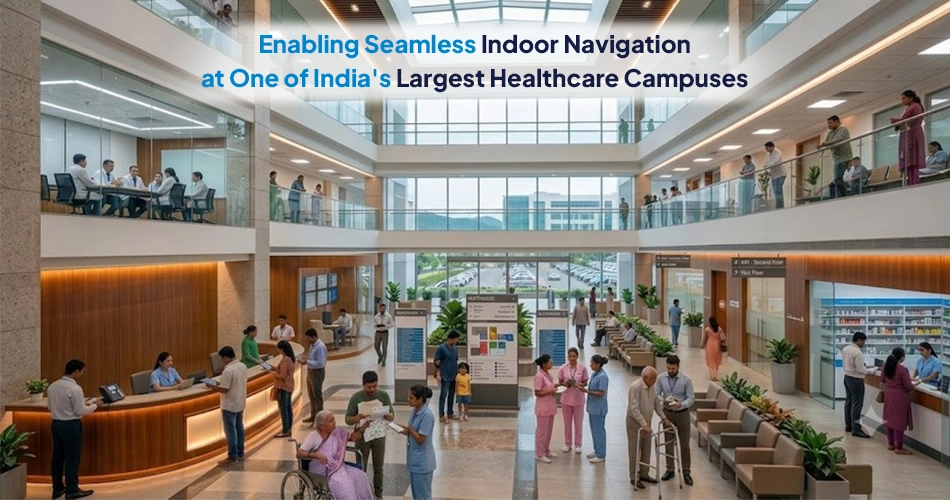
The client, a leading systems integrator, was tasked with helping a large healthcare campus improve visitor navigation and accessibility through digital wayfinding technology. The system integrator was tasked with deploying an indoor navigation solution capable of guiding patients and visitors across multiple buildings, departments, wards, laboratories, and service areas.
Background
Modern healthcare campuses are designed to accommodate thousands of visitors, patients, and healthcare professionals every day. While these facilities deliver world-class medical care, navigating such a large and complex environment can be challenging for first-time visitors.
The healthcare campus in this project consisted of multiple wings, departments, laboratories, pharmacies, and patient care areas spread across a large footprint. Traditional signboards and static maps were proving insufficient for helping visitors reach their destinations efficiently.
The client envisioned a GPS-like indoor navigation experience that would allow users to navigate the campus with the same ease as outdoor navigation systems. However, delivering such an experience required highly reliable indoor positioning infrastructure capable of operating accurately at scale.
The healthcare campus in this project consisted of multiple wings, departments, laboratories, pharmacies, and patient care areas spread across a large footprint. Traditional signboards and static maps were proving insufficient for helping visitors reach their destinations efficiently.
The client envisioned a GPS-like indoor navigation experience that would allow users to navigate the campus with the same ease as outdoor navigation systems. However, delivering such an experience required highly reliable indoor positioning infrastructure capable of operating accurately at scale.
The Requirement
Rapidise was engaged to provide the hardware foundation required to support this large-scale indoor navigation deployment.
The key requirements included:
The key requirements included:
The Challenges
Complex Indoor Environment
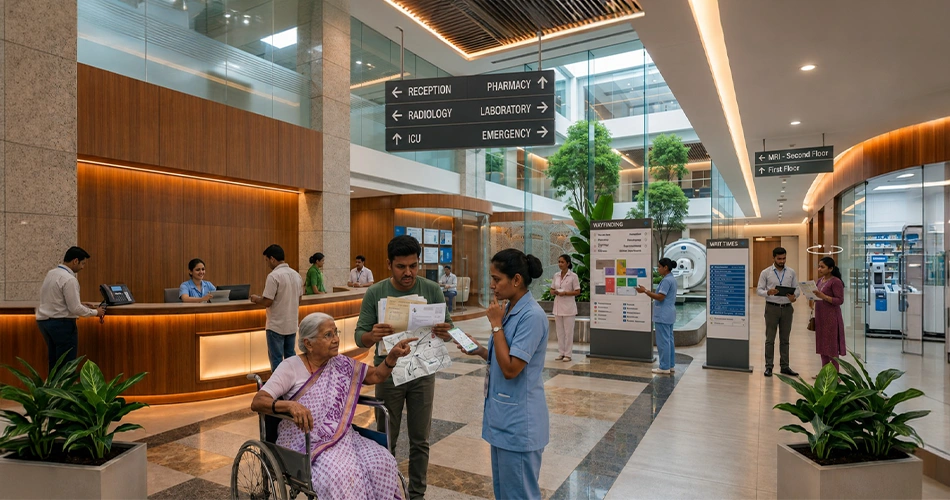
Unlike outdoor navigation, where GPS signals operate in open environments, indoor navigation must contend with structural obstacles, limited line-of-sight conditions, and signal interference from walls, corridors, elevators, and equipment. Ensuring accurate positioning in such a dynamic environment required a highly reliable and optimized beacon infrastructure.
High Reliability Expectations
The navigation system needed to function continuously in a healthcare environment where visitors depend on accurate directions to reach appointments, diagnostic centers, and treatment facilities on time.
Large-Scale Deployment Requirements
The solution had to support campus-wide coverage while maintaining consistent performance across multiple departments, floors, and buildings.
Accessibility & Ease of Use
Hospital visitors often include senior citizens, patients, caregivers, and individuals unfamiliar with digital applications. The solution needed to deliver accurate navigation through a simple and intuitive interface that could be used effortlessly, regardless of age or technical proficiency.
Rapidise’s Approach
1. Designing a Reliable BLE Infrastructure
Rapidise developed and supplied BLE beacon hardware engineered for long-term deployment and consistent performance in demanding operational environments.
The hardware was designed using industrial-grade components and long-life battery architecture to ensure reliable operation with minimal maintenance requirements.
The hardware was designed using industrial-grade components and long-life battery architecture to ensure reliable operation with minimal maintenance requirements.
2. Optimizing Positioning Accuracy
To support accurate indoor navigation, Rapidise focused on signal stability and calibrated beacon performance to match the requirements.
Careful optimization of beacon transmission characteristics helped improve location accuracy and create a dependable positioning framework for the navigation platform without interfering with any medical devices.
Careful optimization of beacon transmission characteristics helped improve location accuracy and create a dependable positioning framework for the navigation platform without interfering with any medical devices.
3. Complete Hardware Ownership
Rapidise managed the complete hardware lifecycle, including product design, component sourcing, manufacturing, and quality control.
This enabled the client to focus on its software platform while Rapidise ensured reliable hardware performance, consistent quality, and uninterrupted supply readiness at scale.
This enabled the client to focus on its software platform while Rapidise ensured reliable hardware performance, consistent quality, and uninterrupted supply readiness at scale.
4. Enabling Seamless System Integration
The beacon infrastructure was integrated with the client’s navigation platform to create a complete indoor wayfinding solution.
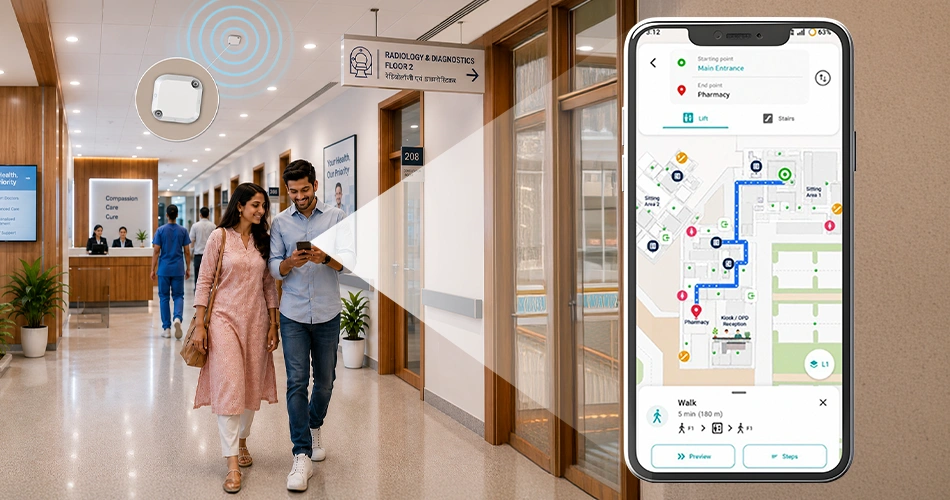
Beacon signals enabled real-time location detection, positioning, and navigation, allowing users to receive accurate turn-by-turn directions throughout the facility.
Beacon signals enabled real-time location detection, positioning, and navigation, allowing users to receive accurate turn-by-turn directions throughout the facility.
The Solution
More than 1,000 BLE beacons were deployed across corridors, waiting areas, wards, and key operational zones throughout the campus. The infrastructure enabled:
The result was a fully connected indoor navigation ecosystem capable of supporting thousands of daily users.
The Outcome
Improved Visitor Experience
Patients and visitors could navigate the campus more confidently and efficiently, reducing confusion and improving overall experience.
Reduced Operational Friction
Healthcare staff spent less time providing directions, allowing greater focus on patient care and operational responsibilities.
Better Appointment Adherence
Improved navigation helped visitors reach departments and appointments more efficiently, reducing delays caused by wayfinding challenges.
Scalable Digital Infrastructure
The deployment established a future-ready indoor positioning foundation capable of supporting additional services and campus expansion.
Benchmark for Smart Healthcare Navigation
The project demonstrated how reliable BLE infrastructure and intelligent navigation software can work together to transform the healthcare experience and improve operational efficiency at scale.
Conclusion
Creating a successful indoor navigation experience requires more than software. It demands a reliable hardware infrastructure capable of delivering accuracy, scalability, and continuous performance.
By providing the BLE beacon foundation for this deployment, Rapidise helped enable a seamless wayfinding experience across one of India’s largest healthcare campuses, improving accessibility, efficiency, and visitor experience through technology.
By providing the BLE beacon foundation for this deployment, Rapidise helped enable a seamless wayfinding experience across one of India’s largest healthcare campuses, improving accessibility, efficiency, and visitor experience through technology.
Other Case Studies