
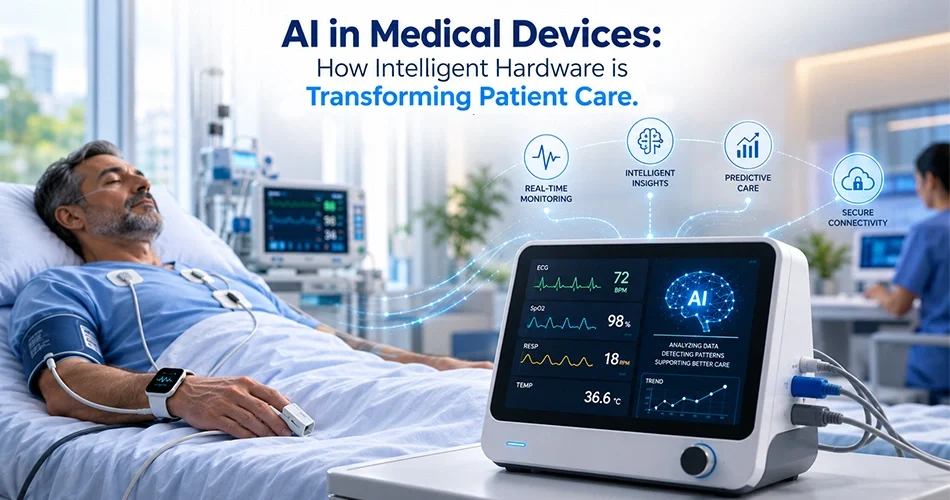
What is AI in Medical Devices, and how is it used?
For a long time, a vehicle camera was mainly there to capture footage. Sensors collected information, while the driver remained responsible for noticing what was happening around the car. That is changing as vehicles become better at understanding the information they collect.
AI in Automotive allows cameras and sensors to do more than simply record or measure. AI models can recognize lanes, identify vehicles, monitor the driver’s attention and spot situations that may need a warning. In practical terms, this gives the vehicle a better understanding of its surroundings and gives the driver useful information while driving.
This change is particularly visible in ADAS, driver monitoring and connected vehicle systems. Automotive solutions in these areas increasingly integrate telematics, embedded systems and AI-driven capabilities to support safer, more connected and intelligent vehicles.
How AI is Transforming Medical Devices
Real-Time Monitoring and Intelligent Insights
Predictive Care and Preventive Interventions
This is one answer to the question, “How is AI used in medical devices?” It can shift monitoring from reporting what is happening now toward identifying what may happen next. The model must be properly trained, tested and validated.
Key Technologies Behind AI Medical Devices
Embedded Systems and Firmware
Sensors and Edge AI
Edge AI allows some analysis to happen directly on the device. This can reduce latency and, in certain applications, limit the amount of sensitive information that needs to be transmitted elsewhere, bringing processing closer to the device.
IoT Connectivity and Cloud Integration
Secure Data Processing
Challenges in AI Medical Device Development
Regulatory Compliance
Regulatory expectations are evolving. FDA guidance emphasises lifecycle management, performance monitoring and risk-based development, while in India, medical devices are regulated under the Medical Devices Rules, 2017, with requirements varying by classification and intended use.
Data Privacy and Cybersecurity
Accuracy, Validation, and Interoperability
From Prototype to Market-Ready Production: Building AI Medical Devices
Hardware + Firmware + AI Integration
Medical device engineering
Prototyping, Testing, Manufacturing, and Lifecycle Support
Conclusion
But successful AI in medical devices requires more than a good model. The hardware, firmware, sensors, connectivity, security, validation and manufacturing process all have to work together, keeping the full development lifecycle and its connected parts in view.
